
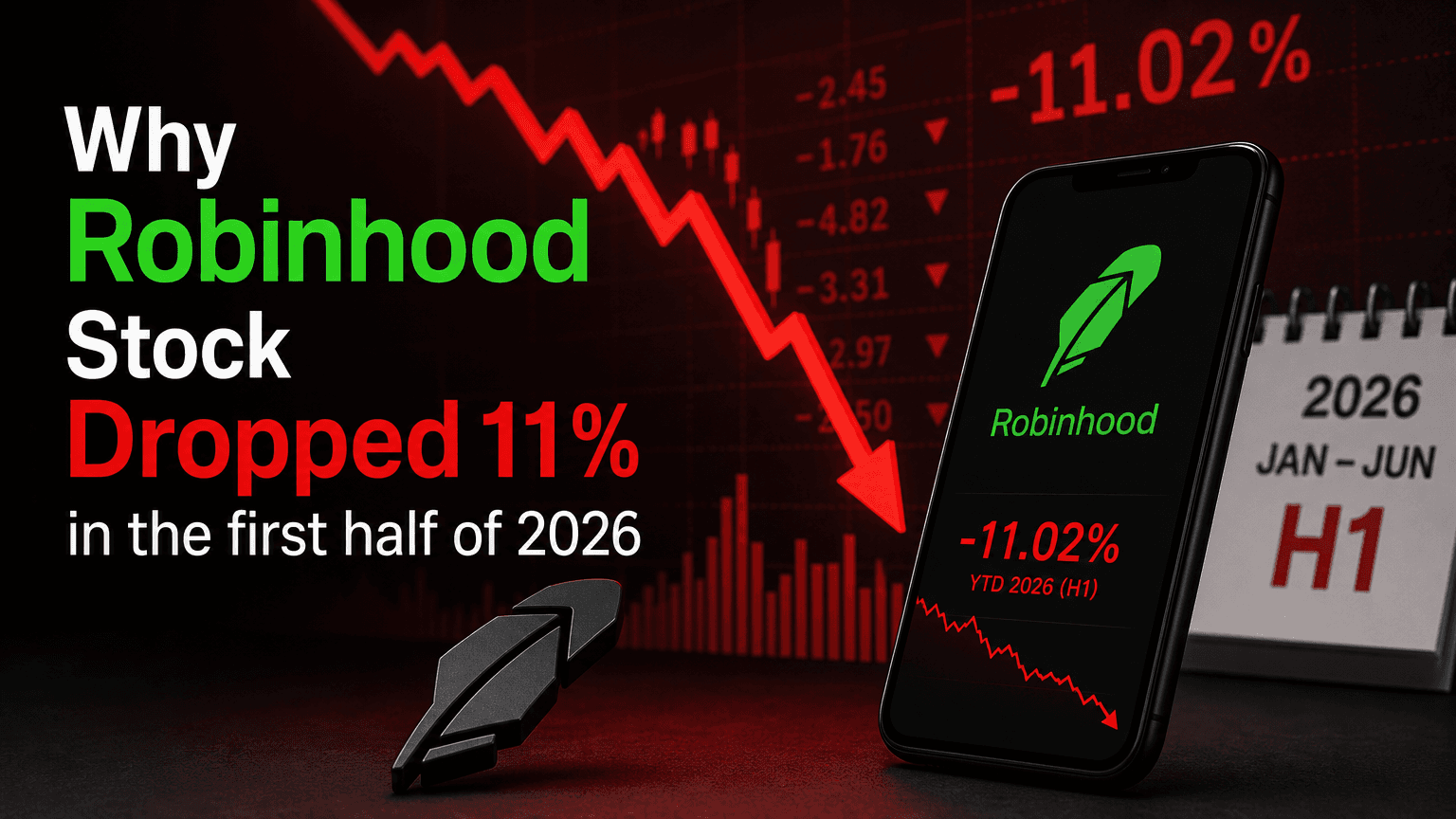
Why Robinhood Stock Dropped 11% in the first half of 2026
06 July 2026
Robinhood Markets: Navigating the Financial Frontier
Robinhood Markets Inc. (NASDAQ: HOOD) has experienced a roller-coaster journey in the financial markets. Despite a notable 11% drop in stock value during the first half of the year, the latter months have seen a promising resurgence, with shares climbing 45% over the past three months. This fluctuation follows the volatile trajectory of Bitcoin, which has influenced both Robinhood's fortunes and investor sentiment. However, Robinhood is not solely tethered to the realm of cryptocurrency; it is a burgeoning fintech force poised to redefine trading and financial services.
Beyond Cryptocurrency: A Diverse Portfolio
With $4.6 billion in trailing 12-month revenue, Robinhood may be considered a relatively small company in the grand scheme of financial markets. Yet, it has undeniably left a significant mark, primarily through its introduction of fee-free trading, which has become a standard expectation across trading platforms. This innovation, alongside others, has positioned Robinhood as a leader in fintech disruptions.
However, this rapid growth hasn't been without challenges. A substantial portion of its initial success was linked to cryptocurrency trading, a market known for its volatility. With the dip in Bitcoin, Robinhood faced contractions in its growth trajectory. Furthermore, ventures like its Prediction Markets segment introduce a layer of risk that could deter more conservative investors.
On a positive note, Robinhood’s selection as a trading platform for the highly anticipated SpaceX IPO illustrates its growing clout in facilitating retail investor access to high-profile market entries. Further bolstering its credentials, Robinhood has secured approval to underwrite IPOs, a nod to its expanding influence in equity markets.
Moreover, Robinhood has been strategically expanding its offerings to traditional financial services. The introduction of credit cards and bank accounts indicates a strategic pivot towards stability, aiming to cushion the company against the inherent risks of its more speculative segments. These services not only anchor its revenue streams but also position Robinhood as a comprehensive financial hub.
Financial Performance: Bumpy Road Ahead?
With the decline in cryptocurrency trading, Robinhood's revenue growth has tempered, increasing by a modest 15% year-over-year in the first quarter of 2026. This is a stark contrast to the 50% surge seen in the previous year and reflects a 47% decline in cryptocurrency trading revenue juxtaposed with a 46% increase in equities trading revenue. Despite these headwinds, several metrics paint a positive picture: platform assets soared by 39%, and Robinhood Gold subscribers rose by 36% to a total of 4.3 million. Additionally, the company’s banking arm reported a fivefold sequential growth, indicative of its robust expansion strategy.
Assessing Robinhood’s Investment Potential
The initial 11% dip may have obscured recent gains, yet the 45% rally in recent months has rekindled investor confidence in Robinhood’s evolving capabilities and growth prospects. Importantly, the depreciation in stock value earlier in the year has rendered Robinhood more attractive from a valuation perspective. Previously priced for perfection, any external pressures could easily push the stock down — a scenario investors witnessed firsthand.
Currently trading at a price-to-earnings (P/E) ratio of 55 and a price-to-sales ratio of 22, Robinhood may be inching back toward a premium valuation. For risk-tolerant investors with a long-term outlook, this pricing could present an enticing entry point. However, as the stock price appreciates, the inherent susceptibility to market corrections increases, necessitating cautious optimism moving forward.
Go to all articles
Read more
21 August 2026
Bitcoin surges 12% crosses $70,000: 5 key drivers behind the rally
19 August 2026
Bitcoin climbs towards $64,000 as cooling inflation and falling treasury yields aid recovery
17 August 2026
INSTITUTIONAL | Israel's Largest Bank Becomes the First Bank to Offer Crypto Trading
14 August 2026
Swissquote shares sink 10% as crypto slump prompts 2026 guidance cut By Investing.com
12 August 2026
Robinhood adds over 50 tokens to become an 'all-in-one' UK platform - AMBCrypto
10 August 2026
'I Thought It Was a Cambodia Trip': Sanitation Worker's Court Lie Brings Perjury Conviction
07 August 2026
After Earnings, Is Coinbase Stock a Buy, a Sell, or Fairly Valued?
05 August 2026
Hong Kong Woman Loses $3.3 Million in Fake Crypto App Romance Scam
03 August 2026
Cardano Climbs 10% As Investors Gain Confidence By Investing.com
31 July 2026
Why Is Robinhood Stock Rising Today? Strong Trading Activity Helps Beat Earnings Despite Crypto Slowdown
29 July 2026
Flipster Secures VARA Full Operational Exchange License, Advancing Regulated Crypto Services in the UAE
27 July 2026
XEM Sees 11.83% Slide Amid Mixed Crypto Market Signals
Do you need a customized plan for trading?
Effective assistance on various aspects of your trading account and other financial activities related to trading on the broker's platform.